
Outlook for external sector is the most favourable.

S&P Global Ratings has increased India's GDP growth forecast for the next fiscal year to 7.1 per cent, citing private consumption, investment, and exports as key drivers. However, the agency also cautioned that the conflict in the Middle East could strain India's fiscal position due to higher energy prices.

Gold prices experienced a significant decline in futures trading due to uncertainty surrounding geopolitical tensions in West Asia and conflicting statements regarding the conflict. Investors are also awaiting key macroeconomic data for further direction on interest rate cuts.

The Omicron variant of Covid-19 adds new uncertainties to the global economic outlook but much will depend on its speed of transmission, hospitalisation and death rates, and also the effectiveness of vaccines, Moody's Analytics said on Monday. In its commentary titled 'Much to Learn About Omicronast', Moody's Analytics said although the variant appears to spread "remarkably quickly", it will be at least two more weeks before more will be known about this new variant. "The Omicron variant of COVID-19 adds new measures of uncertainty to the outlook for the global economy, although it is too soon to adequately quantify that risk.

The advanced economies have been experiencing their longest period of slow growth in many decades.
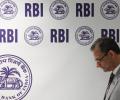
Uncertainties stemming from the West Asia crisis and its potential impact on inflation and economic growth were key factors in the Reserve Bank of India's Monetary Policy Committee (MPC) decision to maintain the status quo on interest rates, according to the recently released MPC meeting minutes.

India's economy is projected to maintain growth above 7 per cent in 2026-27 (FY27), supported by strong domestic consumption and investment, even as global growth faces risks from geopolitical tensions, according to industry body Assocham.

Moody's Ratings has reduced India's GDP growth forecast for 2026 to 6 per cent, citing subdued private consumption, capital formation, and industrial activity due to higher energy costs and global uncertainties.

The OECD projects India's GDP to grow at 7.6% in the current fiscal year and 6.1% in 2026-27, despite global economic challenges stemming from the Middle East conflict and energy price volatility.

S&P Global Ratings warns that a sustained rise in crude oil prices to $130 per barrel could significantly slow India's economic growth, weaken fiscal metrics, and strain corporate and banking sector performance, potentially reducing growth by up to 80 basis points.

Markets will look for clear guidance on how the MPC interprets the uncertainty and what it implies for the future course of monetary policy, points out Rajeswari Sengupta.

'Markets never fully lose hope. But an important shift could come if the Strait remains closed -- moving from high prices to no prices.'

Analysts predict that the ongoing conflict in West Asia, crude oil prices, and global trends will significantly influence the Indian stock market in the upcoming holiday-shortened week. Foreign investor activity and rupee movement will also be crucial.

The Indian rupee depreciated by 32 paise to close at 92.83 against the US dollar, influenced by escalating global tensions, particularly the US-Iran conflict, and the deadline for the RBI's instructions to banks to curb overnight positions.

A new survey indicates that Indian employers are planning to increase hiring in the April-June quarter, driven by strong business confidence and domestic demand. The survey also highlights the impact of AI adoption on workforce strategy and the challenges of talent scarcity.

Fitch Ratings on Friday said persistently higher oil prices could cause India's retail inflation to rise faster than the expected gradual pace, and lead to a slowdown in economic growth in the first half of financial year 2026-27 (FY27).

Gold and silver prices experienced a significant drop in the national capital due to a global selloff driven by inflation concerns, central bank policies, and geopolitical tensions.
The government is "extremely disappointed" with the latest report of the Moody's rating agency on India's economic outlook. The report, a senior government official said, was highly contradictory and called the rating agency's credibility into question. Referring to the Moody's statement that "India's fiscal strength remains a key weakness in the sovereign credit profile...", the official remarked: "How can my strength be my weakness? Moreover, they are unwilling to have a like-to-like comparison with India."

The value of the rupee, which has slipped to the 92 per dollar mark, does not accurately reflect India's stellar economic fundamentals, the Economic Survey said on Thursday.

Indian stock markets experienced a significant sell-off, with the Sensex tumbling over 1,300 points, driven by escalating crude oil prices due to US-Iran tensions and Prime Minister Narendra Modi's call for austerity measures, which amplified investor concerns about India's economic outlook.

'The West Asia or the Gulf crisis has shown that what we develop as national infrastructure when things are not as bad as they could be, we forget to plan for adversities.'

In the present hyper-connected world, there are many domestic and global factors that affect financial markets. Of them, the most powerful and often least predictable are geopolitical events, which often boil down to one diplomatic headline.

The Economic Survey on Thursday projected the GDP growth in the range of 6.8 to 7.2 per cent in 2026-27, a tad lower than 7.4 per cent estimated in the current fiscal.
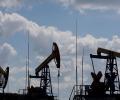
Global energy markets saw a significant correction as oil prices nosedived following Iran's announcement that the Strait of Hormuz has been fully reopened, dismantling the 'war-risk' premium that had gripped the market.

India's GST revenues experienced significant growth in March, reaching pre-tax cut levels, driven by increased imports and domestic sales. The report analyses the impact of tax rate changes and provides insights into future trends and economic stability.

Indian equities are experiencing their sharpest rebound in years, with the BSE 500 index rallying 12.1 per cent so far this month, echoing Covid-era recoveries despite ongoing geopolitical uncertainty and earnings risks.

'As re-industrialisation gathers pace across regions like Asia, Europe and the US, a wide range of products and inputs will see demand.'

New completions in India's office real estate sector fell by 36 per cent to 9.7 million square feet in Q1 2026, the lowest in four quarters, primarily due to developers adopting a cautious stance amid global uncertainties, particularly in Bengaluru, Hyderabad, and Mumbai. Despite this, office absorption increased by 20 per cent, indicating strong occupier demand.

Revenue collection next financial year may be affected, and, along with this, subsidies on food and fertilisers can go up if the war in West Asia drags for long, according to experts.

The Indian rupee rebounded against the US dollar after the Reserve Bank of India (RBI) restricted banks' net open positions in dollars. This move prompted banks to sell dollars, providing temporary support for the rupee amidst ongoing geopolitical tensions and rising oil prices.

Aviation fuel prices for domestic airlines remain unchanged, providing stability for local carriers, while commercial LPG and 5-kg cylinders see a significant rate hike due to rising international energy costs.

Financial year 2025-26 (FY26) saw a significant shift in corporate fundraising, with rights issues more than doubling to a multi-decade high of 51, raising 44,290 crore, while qualified institutional placements (QIPs) more than halved to 29 issues, mobilising 62,954 crore, driven by sharp equity market corrections and regulatory changes.

The Federation of Indian Export Organisations (FIEO) has appealed to the Reserve Bank of India (RBI) for liquidity support to Indian exporters, citing a significant increase in freight costs and extended payment cycles due to the ongoing West Asia conflict.

Foreign investors have withdrawn over Rs 88,000 crore from Indian equities this month, driven by geopolitical tensions, a weak rupee, and concerns about rising crude oil prices.

Signs of a strong pickup in hiring by companies are adding to the rosier outlook for Indian households.

The Indian rupee depreciated by 52 paise to settle at 93.35 against the US dollar, driven by failed US-Iran peace talks, surging crude oil prices due to a potential US blockade of Iranian ports, and a global flight to the greenback. This geopolitical uncertainty is also leading to foreign capital withdrawal from domestic equities.
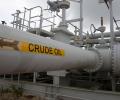
Crude oil prices experienced a significant drop following the announcement of a US-Iran ceasefire and the reopening of the Strait of Hormuz, leading to heavy selling by traders.

'After the Galwan clash, the rules of engagement changed with the army commanders allowed to use any means at their disposal as they deem fit for tactical operations.'

State-owned Indian Oil Corporation (IOC), Bharat Petroleum Corporation Ltd (BPCL), and Hindustan Petroleum Corporation Ltd (HPCL) are reportedly incurring losses of Rs 18 per litre on petrol and Rs 35 per litre on diesel, as they continue to absorb rising crude oil costs without increasing retail prices. This situation is leading to expectations of a fuel price hike after upcoming state elections.

FMCG major Hindustan Unilever Ltd (HUL) reported a 21 per cent increase in its March quarter consolidated net profit, reaching Rs 2,994 crore, primarily driven by higher volumes and a significant gain from the divestment of its stake in Nutritionalab.
 © 2026 Rediff.com - Advertise with us - Disclaimer - Privacy Policy - Sitemap - Feedback - About us - Terms of use - Grievances